
Description
Sugarcane is one of the world’s most important commercial crops and a major source of sucrose for the global food industry. This tall, perennial grass thrives in warm tropical and subtropical climates, where it develops thick stalks containing naturally sweet juice.
Premium Sugarcane is cultivated and harvested for its high-quality juice, which can be processed into raw sugar, refined sugar, molasses and other valuable products. Beyond food production, the crop also provides important raw materials for biofuel, animal feed and renewable energy applications.
The stalk contains a naturally concentrated source of sucrose, making Sugarcane an essential agricultural commodity for sugar mills, food manufacturers and beverage producers.
With its wide range of applications, Sugarcane contributes significantly to the food, beverage, agricultural and renewable-energy industries.
Origin & Cultivation
Sugarcane has been cultivated for thousands of years and is believed to have originated in Southeast Asia and the Pacific region before spreading to other tropical areas.
Today, major production takes place in countries with suitable warm climates, including Brazil, India, China, Thailand and several other regions.
The crop requires adequate sunlight, water and fertile soil to achieve strong stalk development and high sugar yields.
Appearance & Characteristics
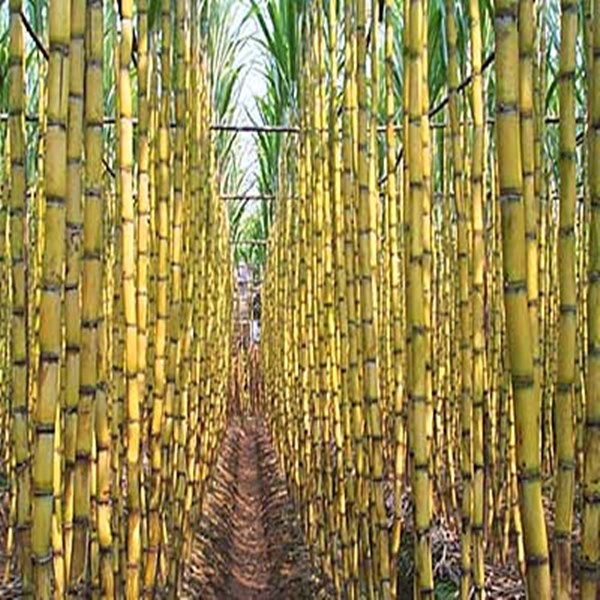
Premium Sugarcane typically features:
- Tall, straight stalks
- Jointed segments
- Green, yellow-green or purple-brown outer surface
- Fibrous internal structure
- Naturally sweet juice
- High moisture content
The exact appearance varies according to the variety, growing conditions and maturity at harvest.
Taste & Quality Profile
Fresh sugarcane juice has a naturally sweet and refreshing flavour with subtle grassy and vegetal notes.
The quality of harvested cane is commonly influenced by:
- Sucrose concentration
- Cane maturity
- Moisture content
- Variety
- Growing conditions
- Harvesting and storage practices
Technical Specifications
| Specification | Details |
|---|---|
| Product Name | Sugarcane |
| Category | Agricultural Crop |
| Botanical Family | Poaceae |
| Primary Use | Sugar and sweetener production |
| Origin | Tropical and subtropical regions |
| Form | Fresh cane stalks |
| Colour | Green, yellow-green or purple-brown |
| Structure | Fibrous, jointed stalk |
| Primary Component | Sucrose-rich cane juice |
| Main Products | Sugar, molasses, cane juice and ethanol |
| By-products | Bagasse and molasses |
| Industrial Uses | Food, beverage, biofuel and biomass energy |
| Storage | Cool and protected conditions after harvest |
| Processing | Crushing, juice extraction and refining |
Common Uses of Sugarcane
Sugar Production
The primary commercial application is the extraction of cane juice for the production of raw and refined sugar.
Sugarcane Juice
Fresh cane can be crushed to produce naturally sweet juice, which is consumed as a beverage in many countries.
Molasses
Molasses is a valuable by-product of sugar production and is used in food manufacturing, animal feed and fermentation.
Ethanol Production
Sugarcane is an important feedstock for producing bioethanol, particularly in large-scale renewable fuel industries.
Biomass & Energy
The fibrous residue known as bagasse can be used as a biomass fuel for heat and electricity generation.
Agricultural & Industrial Benefits
- Major source of natural sucrose
- Important global agricultural commodity
- Supports sugar and beverage industries
- Provides raw material for bioethanol
- Generates useful agricultural by-products
- Bagasse can support renewable energy production
- Suitable for multiple industrial applications
- Creates value across food, agriculture and energy sectors
Harvesting & Processing
Mature Sugarcane is harvested when the stalks have reached suitable sugar content. After harvesting, the cane is transported to processing facilities where it is cleaned and crushed.
The extracted juice is processed to separate impurities and recover sugar. The remaining fibrous material, known as bagasse, can be utilised as biomass fuel, while molasses is recovered as another valuable by-product.
Storage & Handling
Fresh Sugarcane is perishable and should be processed as soon as practical after harvesting to preserve juice quality and minimise deterioration.
For commercial applications, harvested cane should be handled carefully and transported under appropriate conditions before processing.
Why Choose Premium Sugarcane?
- High-quality agricultural raw material
- Naturally rich in sucrose
- Suitable for sugar and juice production
- Valuable source for bioethanol manufacturing
- Useful by-products for animal feed and biomass
- Supports food, beverage and renewable-energy industries
- Widely traded agricultural commodity
- Versatile industrial applications
Conclusion
Sugarcane is a highly versatile agricultural crop with enormous importance across the global food, beverage and energy industries. Its naturally sweet juice provides the foundation for sugar production, while its by-products create additional value through molasses, animal feed, biofuel and biomass applications.
From traditional sugar production to modern renewable-energy solutions, premium Sugarcane remains an important and valuable agricultural resource with applications across multiple industries.


Reviews
There are no reviews yet.