
Description
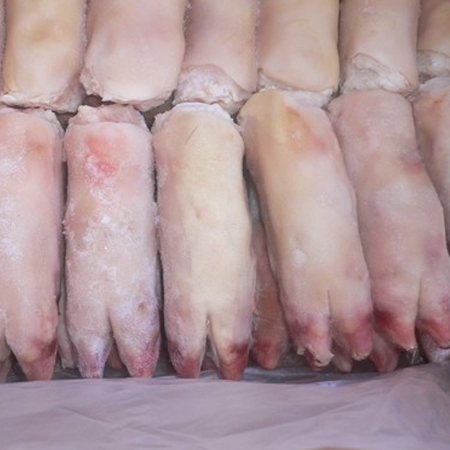
Frozen Pig Feet, also known as pork trotters, are the cut lower extremities of swine consisting of the foot and ankle portion. Highly valued in Asian, European, Latin American, and African culinary traditions, they are rich in gelatin, collagen, and connective tissue, making them ideal for braising, stewing, pickling, and soup stock preparation.
In international trade, this commodity is typically sold as a frozen, raw, or minimally processed meat product. Each unit is cleaned, singed to remove hair, and scraped to ensure a food-safe surface before being individually quick-frozen (IQF) or block-frozen for bulk shipment. The product is a staple in both ethnic food retail and industrial collagen extraction.
H2: Frozen Pig Feet Technical Specifications
Table
| Property | Specification | Standard |
|---|---|---|
| Product Name | Frozen Pig Feet / Pork Trotters | — |
| Alternative Names | Pork Trotters, Pig Trotters, Manitas de Cerdo | — |
| Origin | USA, Canada, EU, Brazil | Traceability records |
| Grade | Grade A (select), Grade B (standard), Grade C (processing) | Visual / QC |
| State | Frozen (raw, cleaned, singed, scraped) | — |
| Weight per Piece | 300 g – 600 g (average ~450 g) | Weighing scale |
| Fat Content | 12% – 18% | Laboratory analysis |
| Protein Content | 18% – 22% | Laboratory analysis |
| Moisture Content | 65% – 70% | Laboratory analysis |
| Collagen Content | High (>20% of protein fraction) | Hydroxyproline assay |
| Freezing Temperature | –18°C to –22°C (0°F to –8°F) | Cold chain monitoring |
| Shelf Life | 18 – 24 months at –18°C | Storage stability |
| Glazing | 0% – 5% protective ice glaze (optional) | Net weight basis |
| Toenails | Removed or intact (per customer spec) | Visual inspection |
| Foreign Matter | None | Visual / X-ray |
| Microbiological Standard | TVC < 10⁵ cfu/g; Salmonella absent in 25g | ISO 4833 / ISO 6579 |
H2: Processing Standards for Frozen Pig Feet
Each batch of Frozen Pig Feet undergoes rigorous processing to meet international food safety and import standards:
-
Receiving & Inspection: Feet are inspected for lesions, bruising, and contamination at the slaughterhouse.
-
Cleaning & Singeing: High-temperature singeing removes hair and keratinized outer layers.
-
Scraping & Trimming: Mechanical and manual scraping ensures removal of residual hair and debris; excess fat is trimmed per grade.
-
Washing: Chilled potable water rinse reduces microbial load.
-
Chilling: Rapid chilling to < 4°C within regulatory timeframes.
-
Freezing: Blast freezing to –18°C core temperature within 4 hours to preserve cellular structure.
-
Grading & Packing: Sorted by size and quality grade; packed into food-grade polyethylene liners inside corrugated cartons.
-
Metal Detection & Storage: Final inspection before transfer to –20°C export cold storage.
Certifications Available:
-
HACCP (Hazard Analysis Critical Control Points)
-
BRC (British Retail Consortium)
-
ISO 22000:2018 Food Safety Management
-
USDA Inspection (USA origin)
-
SIF Certification (Brazil origin)
-
EEC / EU Health Mark (European origin)
-
FDA Registration (for USA import)
H2: Culinary Applications & Market Uses for Frozen Pig Feet
Frozen Pig Feet serve diverse markets worldwide:
Table
| Market Segment | Application | Preparation Style |
|---|---|---|
| Asian Cuisine | Braised pork trotters, dim sum, hot pot | Soy-braised, vinegar stew, chili oil |
| Latin American Cuisine | Patitas de cerdo, souse, mondongo | Pickled, stewed, in tomato sauce |
| European Cuisine | Aspic, terrine, rillettes, head cheese | Boiled, deboned, set in gelatin |
| African Cuisine | Pepper soup, spicy stews, grilled | Slow-cooked in spice broth |
| Industrial Processing | Collagen extraction, gelatin, pet food | Rendered, hydrolyzed, ground |
| Bone Broth & Stock | Restaurant and retail bone broth bases | Simmered for 8–12 hours |
H2: Quality Grades & Sizing for Frozen Pig Feet
Table
| Grade | Description | Target Market |
|---|---|---|
| Grade A (Select) | Clean, uniform size, minimal fat, no discoloration, nails removed | Premium retail, high-end restaurants, export to Asia |
| Grade B (Standard) | Slight size variation, moderate fat, minor cosmetic defects acceptable | Foodservice, ethnic grocery, general wholesale |
| Grade C (Processing) | Irregular sizes, higher fat, suitable for mechanical processing | Collagen extraction, pet food, industrial rendering |
Sizing Categories:
-
Small: 250 g – 350 g per piece
-
Medium: 350 g – 450 g per piece
-
Large: 450 g – 600 g per piece
-
Mixed: Unsorted (processing grade)
H2: Packaging & Cold Chain Logistics for Frozen Pig Feet
Table
| Packaging Type | Net Weight | Configuration | Pallet Load |
|---|---|---|---|
| Carton with PE Liner | 10 kg | 20–25 pieces per carton | 100 cartons |
| Carton with PE Liner | 15 kg | 30–35 pieces per carton | 80 cartons |
| Carton with PE Liner | 20 kg | 40–50 pieces per carton | 64 cartons |
| Bulk Poly Bag | 30 lb (13.6 kg) | USA standard export pack | 90 bags |
Packaging Features:
-
Food-grade, 5-ply corrugated outer carton
-
Double-walled polyethylene inner liner to prevent freezer burn
-
Vacuum-sealed options available for premium retail
-
Master carton labeling with production date, batch code, weight, and origin
-
Palletized and shrink-wrapped; corner boards for stack stability
Shipping:
-
Container Type: 40-foot high-cube reefer container
-
Temperature Setting: –18°C continuous
-
Loading: Stuffed at –20°C cold storage; pre-cooled container
-
Transit Time: Up to 45 days sea freight with temperature logging
-
Documentation: Health certificate, certificate of origin, packing list, commercial invoice, bill of lading, export license where applicable
H2: Why Source Frozen Pig Feet From Us?
-
Certified Supply Chain: Direct partnerships with USDA, SIF, and EU-approved slaughterhouses
-
Grade Consistency: Strict sorting protocols ensure you receive exactly the grade specified
-
Custom Processing: Nails on/nails off, fat trim level, and glazing percentage tailored to your market
-
Competitive Bulk Pricing: Transparent per-kg pricing with volume rebates for 40-foot container commitments
-
Export Documentation: Full customs and veterinary paperwork for Asia, Middle East, Africa, and Latin America
-
Cold Chain Integrity: GPS-tracked reefer containers with automated temperature alerts
H2: Storage & Handling Guidelines for Frozen Pig Feet
Shelf Life: 18–24 months from production date at –18°C or below
Receiving Inspection:
-
Verify container temperature upon arrival (should read –18°C or lower)
-
Check carton integrity; reject any cartons with tears, wetness, or thawing signs
-
Confirm net weight matches packing list; note any glazing variance
Warehouse Storage:
-
Store at –18°C to –22°C in a dedicated frozen meat cold room
-
Maintain FIFO (First In, First Out) rotation
-
Keep away from strong-smelling products (fish, spices) to prevent odor absorption
-
Do not stack pallets beyond 6 layers unless racking is engineered for higher loads
Thawing & Preparation:
-
Thaw under refrigeration (0°C – 4°C) for 24–48 hours before processing
-
Do not thaw at room temperature; this promotes bacterial growth on the surface
-
Once thawed, use within 48 hours; do not refreeze
H2: Frequently Asked Questions (FAQ)
Q: What is the minimum order quantity for Frozen Pig Feet? A: MOQ is one 40-foot reefer container (approximately 25–28 metric tons). Trial shipments of one pallet (10–20 cartons) can be arranged for first-time buyers to verify quality.
Q: Are the toenails removed or left intact? A: Both options are available. Most Asian and European markets prefer nails removed. Latin American and African markets often accept intact nails. Specify your preference when ordering.
Q: What is the difference between Grade A and Grade B pork trotters? A: Grade A features uniform sizing, pristine appearance, and minimal fat—ideal for premium retail and restaurant plating. Grade B allows minor cosmetic variations and is suited for foodservice and stew preparation.
Q: Do you provide Halal or Kosher certified pig feet? A: No. Pig feet are not eligible for Halal or Kosher certification. We do offer Halal-certified beef and poultry trotter alternatives upon request.
Q: Can you supply collagen-extraction grade Frozen Pig Feet? A: Yes. We offer Grade C processing feet at competitive industrial pricing specifically for gelatin, collagen peptide, and pet food manufacturers.
Q: What import permits do I need for Frozen Pig Feet? A: Requirements vary by destination country. Common documents include a veterinary health certificate, certificate of origin, and import license. Our export team guides you through country-specific documentation.
H2: Order Frozen Pig Feet Wholesale Today
Request your container quote or trial pallet. Our meat export team will confirm grade availability, sizing specifications, and shipping schedules for your destination port. Full HACCP and BRC documentation provided with every shipment.
[Request Container Quote] | [Download Spec Sheet] | [Arrange Trial Shipment]


Reviews
There are no reviews yet.